Reference
Record the searched product family and the use. Do not interpret the name as the thing being purchased.
Scope checkpoints
The procurement roadmap is a sequence for scope, not a sustainability claim and not a brand history. ArcField Sourcing is an independent sourcing service and does not claim authorized dealer status. A chief buildings lookup is only the starting reference.
Stay on a step until the open choice is either decided or explicitly left for the supplier to assume in writing. That is how a later quotation stays comparable.
Record the searched product family and the use. Do not interpret the name as the thing being purchased.
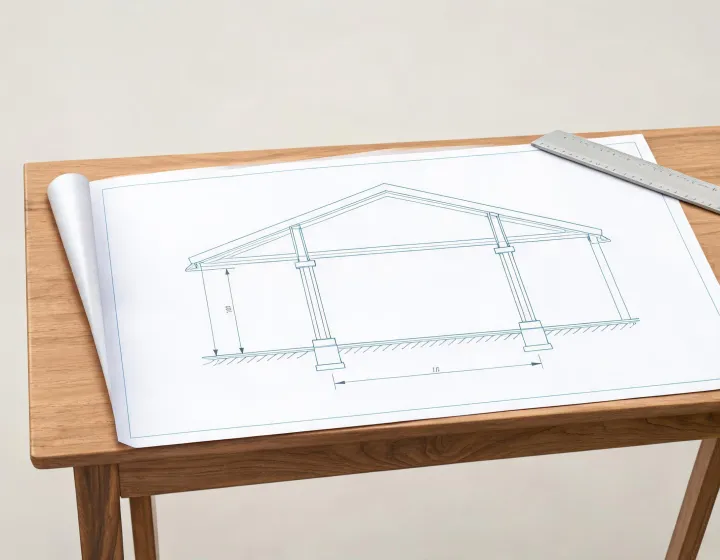
Lock length, width, eave height, bay spacing, clear span and openings. A shop example is 100 ft long, 50 ft clear span, 16 ft eave height and 25 ft bay spacing.
Add wind speed, wind exposure category, ground snow load, seismic design category and the jurisdiction, or mark them unknown. 115 mph and 30 psf are sample filled cells, not site defaults.
Choose shell, delivered, installed or turnkey and list exclusions under that label.
Ask for drawings and calculations that name the quoted system, then compare deviations before award.
| Shell or kit | |
|---|---|
| Usually inside | Primary frame, secondary framing, bracing, roof and wall covering as specified, and a fastener list. |
| Often outside | Foundation design, anchor installation, erection, doors beyond a stated schedule, utilities and interior fit-out. |
| Delivered or installed | |
| Delivered | Freight to the destination and the stated unloading point. A crane lift plan is separate unless named. |
| Installed | Erection of the quoted package. Foundation interface, grout and anchor responsibility still need an owner. |
| Turnkey conversation | |
| Still confirm | Permits, utility taps, civil work, finishes and commissioning. A broader label does not erase local exclusions. |
| Method choice | Volumetric modules, panelized parts, a folding unit or a rigid steel system stay different supply paths even under one label. |
Standard bays shorten the comparison when the published geometry fits. Custom engineering is the honest path when clear span, collateral load or a crane changes the primary frame. Write that choice before you read prices. Coating and color are finish lines. They do not replace steel grade, weld scope or thermal transmittance of the enclosure. A workshop note that fixes a 50 ft clear span, a 16 ft eave and a 5-ton crane allowance still fails comparison if one offer stops at the shell and another includes erection plus anchor bolts. Mark the crane beam, the foundation interface and unloading as included or excluded on both responses. An R-value given only for the roof panel does not describe the wall assembly.
Before acceptance, list every deviation: substituted member, different bay spacing, excluded door, assumed snow load, or a foundation reaction the buyer must design. The project engineer accepts or rejects those lines. This roadmap does not replace that review. See the quote fields or send the remaining choices.
Freight, code jurisdiction and snow or wind criteria can all change with the site. If the ZIP code is provisional, mark it and expect the total to be rechecked.
Reaction loads, anchor bolt diameter and embedment are a handoff. Name the party that designs them and the party that installs them, or the quotes will not match.
Geometry, design criteria, coating, scope label, document set and the commercial basis of quantity and currency. A similar photo is not verification. Standards such as AISC 360 or AWS D1.1 apply only where the quoted work says they apply.
Unsettled lines can be written as questions. The useful request is the one that tells a factory which choices are fixed.
Qualified business buyers
Eligibility applies to qualified business buyers and is confirmed after we review your product, quantity, destination, and sourcing requirements.